Who this guide is for
This guide is for anyone trying to turn a style question into a practical next step. It works especially well when you compare the advice with your measurements, try-on photos, and real closet habits.
The main problem explained
Fabric weight, drape, stretch, texture, and recovery can change whether a silhouette looks intentional. The goal is not to force a label. The goal is to understand the clue clearly enough to shop, tailor, or style with more intention.
What to wear or test first
- Start with one change at a time: rise, length, neckline, fabric weight, color depth, or outfit formula.
- Take a quick mirror photo in consistent lighting so you can compare proportion and color honestly.
- Use your Style Measure result as a filter, then adjust for comfort, budget, and personal taste.
What to avoid
- Avoid using trend language as the only filter. It may not solve the actual fit or style issue.
- Avoid buying more versions of the piece that already fails in your closet.
- Avoid overcorrecting with extremes when a small fit or styling adjustment would solve the issue.
Outfit formulas
- Clean base + intentional finish: choose one strong foundation piece, then add the detail that matches your result.
- Proportion first: set waist placement, hem length, and shoe shape before judging the whole outfit.
- Color cue: repeat one face-framing color or neutral so the outfit feels connected.
Shopping checklist
- Search terms: fabric weight, drape, structure, texture, body type.
- Check size chart measurements, not just product photos.
- Read reviews for repeated fit comments.
- Save search phrases that consistently bring up better options.
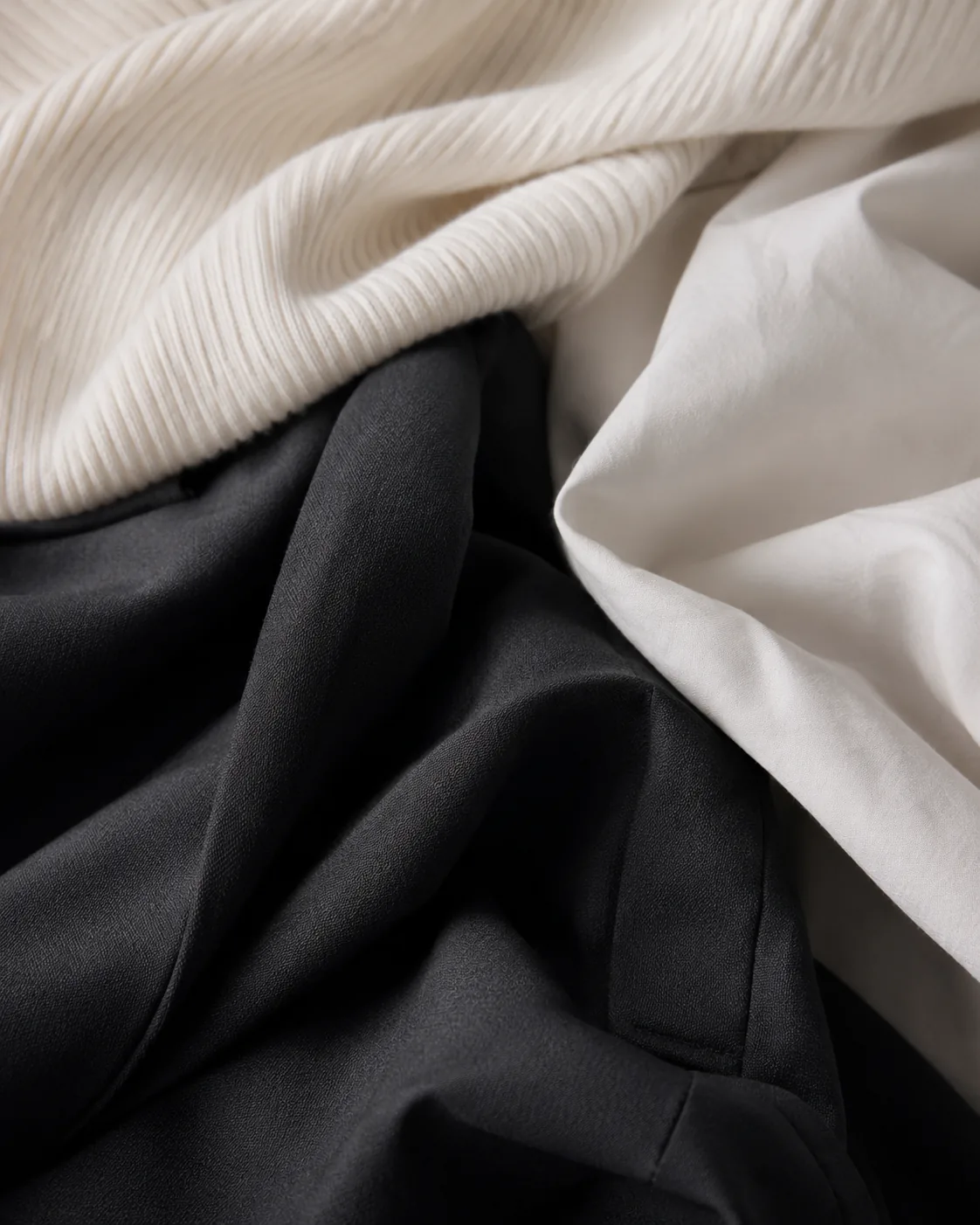
Fabric changes the way a silhouette behaves
The same cut can look polished in one fabric and awkward in another. Fabric controls drape, structure, cling, stretch, recovery, opacity, and how sharply a garment holds its line. This is why a pair of wide-leg pants can look clean in a fluid crepe but bulky in a stiff linen blend, or why a knit dress can skim beautifully in a compact rib but cling in thin jersey.
Fabric qualities to check
- Drape: how the fabric falls from the body. Fluid drape can soften lines; crisp drape can create structure.
- Weight: heavier fabrics often skim better, while very light fabrics can collapse or show every seam.
- Stretch recovery: useful for comfort, but poor recovery can cause bagging at knees, seat, and elbows.
- Texture: texture adds dimension, but too much texture can overwhelm a very clean outfit direction.
How to match fabric to the fit issue
If clothing clings at the midsection, look for more weight or a smoother weave. If clothing looks boxy, look for drape or a shaped seam. If waistbands collapse, look for structure and recovery. If tops pull across the shoulder or bust, check both the cut and the fabric give.
Fabric shopping checklist
- Read the fabric content and look for stretch percentage.
- Check whether the fabric is lined, sheer, ribbed, brushed, crisp, or fluid.
- Read reviews for words like clingy, stiff, thin, heavy, stretchy, or wrinkles.
- Match fabric to use: commuting, sitting, warm weather, workwear, travel, or occasion dressing.
Free shopping search phrases
Open the shopping search phrases instantly, then print or save them before your next shopping session.
Instant access. Email is optional.How to use the product directions
Use the products or retailer links as examples of the fit lane described in the guide. The most important part is not the brand name. It is the feature the item is meant to demonstrate: rise, inseam, waistband shape, fabric weight, width option, shaft measurement, color direction, or closet function.
Before buying, check
- Whether the size chart includes the measurement that matters for your fit issue.
- Whether reviews mention the same concern you are trying to solve.
- Whether the fabric, stretch, heel height, width, or length supports your real lifestyle.
- Whether the return policy gives you enough room to test the item at home.
Related products
Tall Wide-Leg Linen Trouser
Best for: longer legs and full-length summer trousers
Why it works: Tall-specific cuts are the easiest lane for length without sizing up in the waist.
Watch out for: Check reviews for shrinkage and transparency.
Linen-Rayon Wide-Leg Pant
Best for: soft movement with less stiffness
Why it works: A linen blend with rayon can drape better and wrinkle softer than crisp linen alone.
Watch out for: Rayon blends may need gentler washing.
Fabric guide by structure, drape, stretch, and body line
| Fabric behavior | Best for | Use caution when |
|---|---|---|
| Crisp structure | Clean lines, jackets, shirting, trousers | The garment tents away from the body or feels stiff at the shoulder |
| Fluid drape | Soft movement, long lines, skirts, wide-leg pants | The fabric is too thin and collapses or clings |
| Compact stretch | Comfort, denim, ponte, knit dresses | Recovery is poor and fabric bags out after sitting |
| Textured weave | Dimension, relaxed polish, natural fabrics | Texture overwhelms the frame or adds bulk where you want skim |
FAQ
How should I use this guide?
Use it as a starting point, then compare it with your actual measurements, preferences, and outfit photos.
Should I follow every recommendation?
No. Style guidance is a decision tool. Keep what helps, skip what does not match your life or taste.
Where should I go next?
Take the matching Style Measure tool, then move to a shopping guide when you know what you are trying to solve.