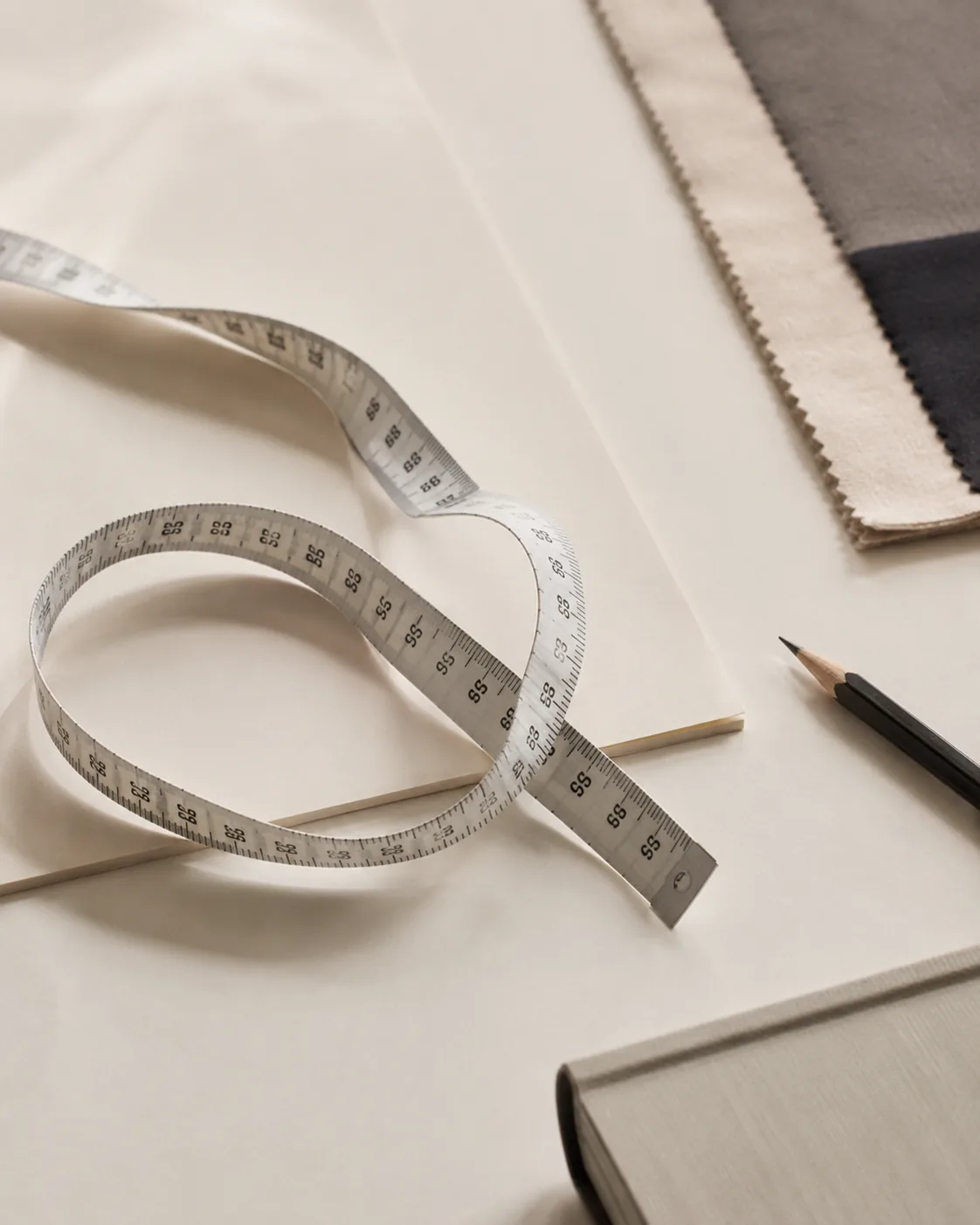
Before you measure
Use a soft tape measure, stand naturally, and measure over close-fitting clothing or lightweight layers. Keep the tape level and snug, not tight. If you can, take each measurement twice and use the average.
Bust and waist
Measure the fullest part of your bust without compressing the body. Measure your natural waist where your torso bends or narrows most naturally.
Hips and high hip
Measure the fullest part of your seat/hips. High hip sits above the fullest hip and helps explain fit issues in skirts, trousers, and jeans.
Shoulders
Measure across the back from shoulder point to shoulder point. This is useful for jacket fit and upper-body balance.
Inseam and rise
Measure inseam from crotch seam to hem on pants that fit. Measure front rise from crotch seam to top of waistband.
What to do with the numbers
Do not compare one measurement in isolation. Fit comes from relationships: shoulder to hip, waist to hip, torso to inseam, rise to comfort, and fabric to body curve.